Beyond the NDPP Appointment: What Will It Take to Turn the NPA Around?
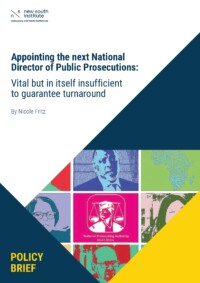
On Thursday, 26 February, the New South Institute hosted a virtual discussion reflecting on our policy brief from the Reforming Governance, Resisting Capture programme, Appointing the Next National Director of Public Prosecutions, authored by Nicole Fritz, NSI Affiliate Researcher. The event examined the future of the NPA, its institutional challenges, and the reforms needed to secure its turnaround.
Fritz’s brief and presentation were anchored in a core argument: the challenges facing the NPA are structural, not episodic. The new NDPP has a narrow 24-month window before mandatory retirement, and this transitional period must be used to lay the foundations for institutional recovery — beginning with a frank diagnostic of the NPA’s depleted state and a serious effort to address the security of tenure regime that has shielded underperformance at the provincial level. Fritz argued that without this groundwork, the appointment risks becoming another turn of the wheel rather than a genuine inflection point.
Jean Redpath grounded these arguments in the data. The NPA today enrols fewer cases than it did three decades ago and secures only half as many convictions. A spike in drug possession cases long masked the decline in serious crime prosecutions — a pattern that became visible only after the Constitutional Court’s ruling on private marijuana use. In commercial crime, conviction rates have fallen from roughly 3 per 100 reported cases in 2006 to 2 per 1,000 today.
Lawson Naidoo addressed the structural constraints that limit any NDPP’s capacity to lead. The NPA does not control its own budget, relying on the Department of Justice for basic operational needs. Nearly all Deputy National Director positions remain vacant, and the NDPP has limited authority over provincial Directors of Public Prosecutions. Without legislative reform, the institution’s design will continue to undercut its leadership.
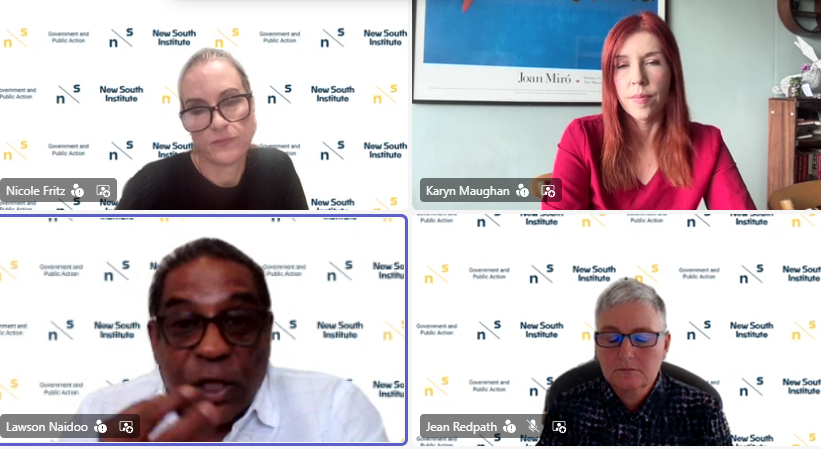
The panel also discussed the resource mismatch that shapes high-profile prosecutions, where well-funded defendants deploy sophisticated legal strategies against a prosecuting authority that struggles to hire a single data analyst. Panellists emphasised that executive action — on appointments, disciplinary matters, and institutional support — has been too slow and too inconsistent to sustain public confidence.
Three priorities emerged from the discussion: legislative reform to grant the NPA financial and operational independence; flexible budgeting that allows the authority to bring in specialist capacity as needed; and decisive executive action to restore trust in the institution’s leadership.
The strength of the NPA is inseparable from the strength of South Africa’s constitutional democracy. At the New South Institute, we believe these are conversations that must continue.
Read Nicole Fritz’s policy brief here. Watch the full discussion on our YouTube channel.