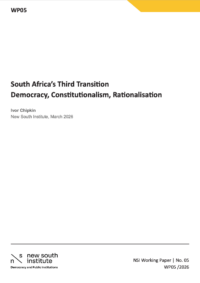
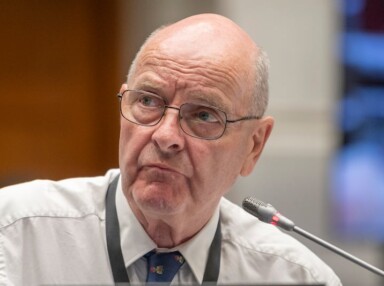
Ivor Chipkin discusses political interference in the SAPS on Newzroom Afrika
On 5 August 2025, New South Institute (NSI) Executive Director Dr Ivor Chipkin was interviewed by Katlego Msomi on Newzroom Afrika to discuss the long-term effects of political interference in the South African Police Service (SAPS) and the implications for crime prevention and public safety.
The conversation came in the wake of significant allegations of corruption and political interference. Nearly a month earlier, KwaZulu-Natal Police Commissioner Nhlanhla Mkhwanazi had made claims that prompted the president to place the minister of police on special leave and to establish a commission of inquiry. The public debate intensified after reports emerged of political figures being found in the company of individuals facing serious criminal charges.
In the interview, Chipkin outlined the historical trajectory of the SAPS:
- In the 1990s, significant reforms placed the police under civilian control for the first time in South Africa’s history, shifting their role from defending political elites to addressing the everyday security needs of all citizens – particularly Black South Africans, who had been excluded from effective policing under apartheid.
- From the early 2000s onwards, however, this progress was reversed. Political influence over the appointment of senior police leaders, beginning during the tenure of Jackie Selebi, re-politicised the police and undermined their independence.
- This politicisation coincided with a decline in investment in frontline policing – fewer officers on the streets, under-resourced stations, inadequate equipment – leaving ordinary police ill-equipped to respond to crime, particularly in high-risk areas.
Chipkin argued that the entanglement of political actors with criminal networks has emboldened organised crime, making it increasingly brazen. Drawing on themes from his previous work, he emphasised that the solution lies in restoring civilian oversight, but through parliamentary rather than executive control. Senior police appointments, he proposed, should no longer be made by the president but through transparent, parliamentary processes.
The full interview is available on the NSI YouTube channel. Watch to gain deeper insight into how the politicisation of the police has shaped crime and governance in South Africa – and how meaningful reform could restore accountability and public trust.