South Africa’s ICJ case and the ANC’s crisis: Ivor Chipkin speaks at Kaplan Centre seminar
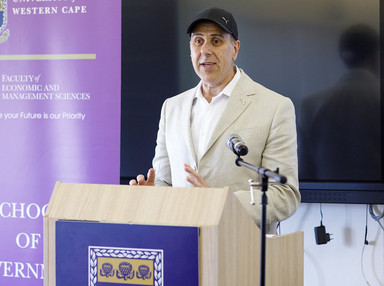
On 19 May 2025, Ivor Chipkin, director of the New South Institute, presented a paper at the Kaplan Centre’s seminar series at the University of Cape Town. The event formed part of an international conference on Jewish Studies and was hosted at the Rachel Bloch House. Chipkin’s talk, delivered under the title ‘Revolution, Imperialism, Anti-Semitism: How the ICJ Case Helps Resolve the ANC’s Organic Crisis’, was presented as part of NSI’s ongoing South–South Dialogues programme.
In his presentation, Chipkin examined South Africa’s recent decision to charge Israel with genocide at the International Court of Justice (ICJ). He argued that this action is not only a matter of foreign policy, but also a symbolic response by the ANC to a prolonged internal ideological rupture. Since 1996, the party has faced an ‘organic crisis’ stemming from the erosion of its revolutionary identity. Chipkin traced the history of the ANC’s attempts to manage this crisis: from Thabo Mbeki’s recasting of the National Democratic Revolution (NDR) as a developmental state, through Jacob Zuma’s invocation of Radical Economic Transformation, to Cyril Ramaphosa’s outward turn – positioning the ANC as a global anti-imperialist force while maintaining a neoliberal posture domestically.
Chipkin also addressed the implications of the ANC’s evolving alignment with Hamas, observing a shift away from the secular PLO and toward a movement with a theocratic and often explicitly antisemitic ideological lineage. He warned that such alliances, while possibly effective in reinforcing the ANC’s radical credentials abroad, risk undermining South Africa’s own secular, democratic traditions. The talk underscored the ANC’s current strategy of substituting international activism for domestic reform – an approach that, according to Chipkin, may deepen rather than resolve the crisis confronting both the party and the country.