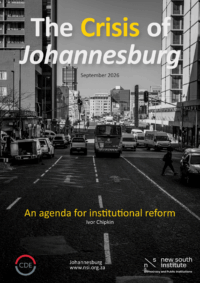
NSI takes the Third Transition conversation to Cape Town
On Monday, 7th September, the New South Institute (NSI), together with the University of the Western Cape’s School of Government, hosted a public lecture on South Africa’s Third Transition.
Delivered by NSI Director Ivor Chipkin, the lecture considered recent developments in South Africa’s public service reform agenda, including the Public Service Amendment Act (PSAA), and what these changes could mean for state capability, public administration and the wider structure of political and economic opportunity in South Africa.
Dr Msuthukazi Makiva, Senior Lecturer at UWC’s School of Government, responded to Ivor’s address, reflecting in particular on what a changing public service could mean for the education and development of future public administrators.
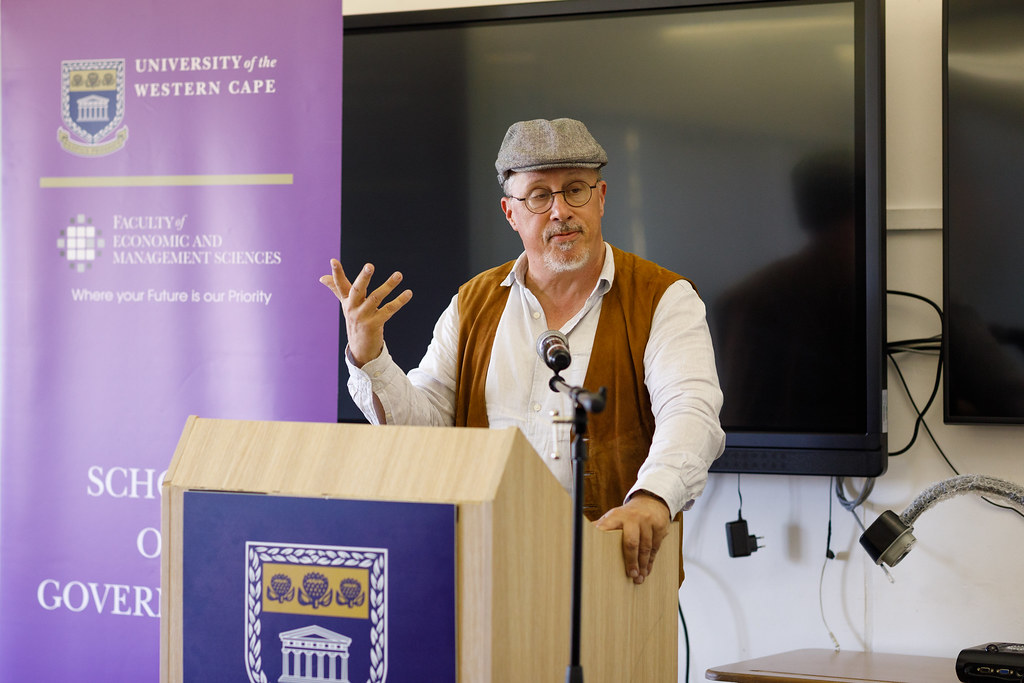
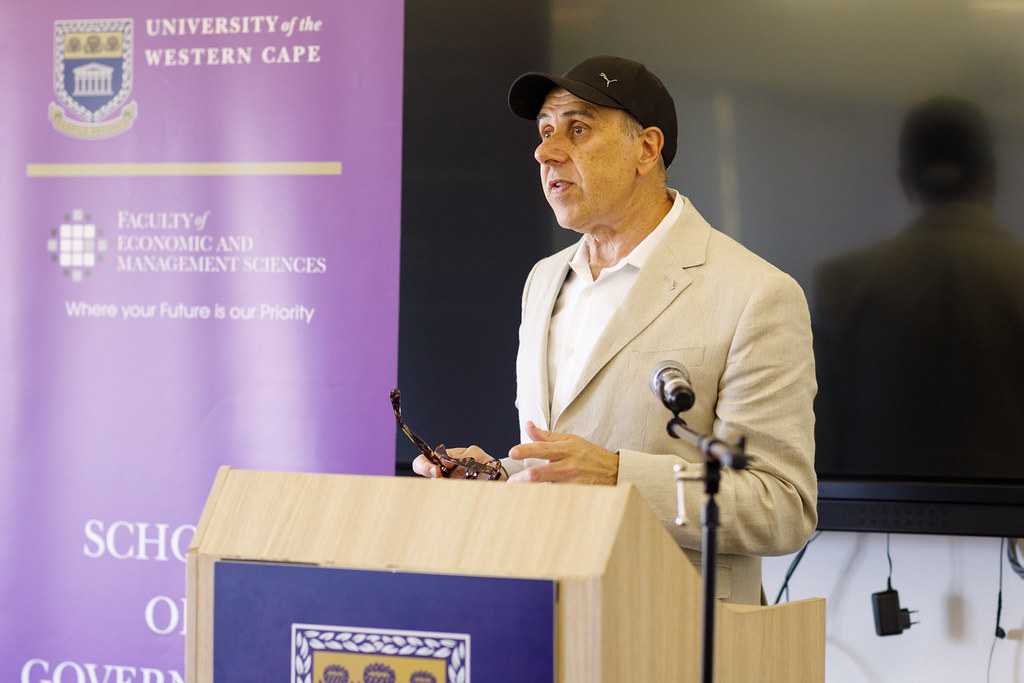
Andries du Toit, Head of NSI’s Histories of Government research programme and Professor at UWC’s School of Government, described the lecture as an opportunity to consider the implications of the PSAA and its potential to transform the public service.
“The core of Ivor’s lecture was the point that he made in his Third Transition paper: because of the institutionalisation of direct political interference in the civil service that was written into the original Public Service Act in 1994, South Africa was effectively in a situation in which senior civil servants could not do their jobs unless politicians let them.
“The PSAA, by creating the conditions for a public service insulated from political manipulation, can thus be argued to be an important step in the consolidation of South Africa’s democratic transition.”
Legislative reform is only part of that transition. A professional public service also requires officials equipped to exercise judgement confidently and responsibly.
“That consolidation and that democratic transition can only happen if there is a public service that has the necessary capabilities to step into that role. Among other things, that requires creating a cohort of public servants that have not only the professional and ethical commitment to do so, but also the ability to exercise practical judgement confidently and responsibly.”
Dr Makiva’s response considered what this means for postgraduate education in public administration. She highlighted the importance of moving beyond a traditionally abstract and normative approach towards training that engages more directly with the practical problems and systems that public servants encounter in their daily work.
The lecture was followed by a lively discussion spanning questions about the role of the public service in enabling more equitable change, the employment prospects of public administration graduates, and the implications of the approaching retirement of the generation of public servants who entered government after 1994.
The UWC lecture formed part of a series of Cape Town engagements around NSI’s work on South Africa’s Third Transition. On the 3rd September, Ivor also spoke at the Nelson Mandela School of Public Governance, where he was in conversation with Professor Vinothan Naidoo, who moderated the session.
The seminar considered the shift towards a more professional civil service, including a clearer distinction between political and administrative office and greater responsibility for the management of government departments being placed in the hands of senior public officials.