From Blueprint to Body Count: NSI’s Conversation on the Shadow State
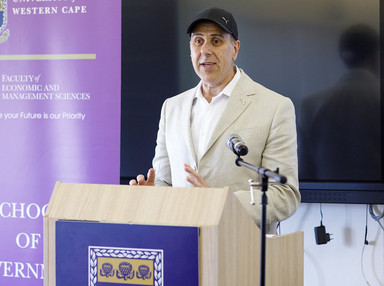
On 5 November 2025, the New South Institute (NSI) hosted a discussion at the Gordon Institute of Business Science (GIBS) Rooftop that brought together research, investigative reporting, law- enforcement experience, and whistleblower testimony on the realities of state capture today. The panel featured NSI Director Ivor Chipkin, author of Shadow State: The Politics of State Capture; News24 investigative journalist Jeff Wicks, author of The Shadow State: Why Babita Deokaran Had to Die; Advocate Andy Mothibi, Head of the Special Investigating Unit (SIU); and PRASA whistleblower Martha Ngoye.


Advocate Mothibi set out a clear institutional picture from SIU casework.
Across South African Airways, Transnet, PRASA and Eskom, his team continues to find repeatable patterns: sophisticated networks exploiting regulatory blind spots, bending procurement systems, and siphoning public resources through layered, low-visibility schemes. His emphasis was that these are not stand-alone scandals but a taxonomy of systemic failure that requires legislative tightening, professionalised public administration, and stronger deterrence tools such as routine lifestyle audits.
Chipkin’s contribution offered the conceptual architecture. Building on the 2017 Betrayal of the Promise report, he argued that state capture should be understood as a durable, adaptive project rather than a past episode. His key question for the room was whether capture networks have simply shifted form since their exposure, or consolidated into more entrenched, decentralised arrangements. The focus, he stressed, should be on identifying interventions that can interrupt capture’s self-perpetuating machinery.
Wicks approached the same system through the human cost of resisting it. His account of Babita Deokaran — assassinated in August 2021 after flagging irregular payments at Tembisa Hospital — illustrated how corruption can operate “below the threshold” of oversight through countless micro-transactions, protected by routine institutional weakness. He described this as “unseen capture”: corruption embedded enough to function like infrastructure, and dangerous enough to eliminate challengers.
Ngoye’s presence added lived authority to the analysis. Speaking as a PRASA whistleblower who survived retaliation, she recast whistleblowing as an act of loyalty to the public interest, while underscoring the real risks faced by insiders who expose wrongdoing.
GIBS Dean, Professor Morris Mthombeni, closed by urging attention not only to institutional breakdown, but also to safeguarding what still works — protecting capable institutions and ethical public servants as part of any reform agenda.
Overall, the session highlighted the complementarity of the two Shadow State books —one mapping the system, the other tracing its consequences — and reinforced that capture remains a present-tense governance challenge. The discussion was valued for combining structural diagnosis with grounded case experience, and for keeping the emphasis on practical levers for reform and accountability.
View a selection of photographs from the event by clicking here