Public Service Reform
The Challenge
Across much of the world, governments struggle to turn policy into practical results. This is especially true of countries that have come through complex transitions. South Africa is no exception. Too often, policies are poorly implemented, or the outcomes are costly and of low quality.
Why does this happen?
Sometimes, policy gridlock is a consequence of layers of regulation that give multiple interests the power to veto action. In South Africa, the usual explanation is corruption — the greed or misconduct of political elites. But this view tells only part of the story.
At the New South Institute, we look instead at how public institutions are built and managed. The Public Service Reform Programme examines the structure of government itself — how authority, accountability, and expertise are distributed — and works towards administrations that are professional, relatively autonomous, and accountable.
Our Approach
Working with partners in government, civil society, and universities, the NSI promotes reforms grounded in a basic rule of institutional design:
• Politics and administration are not the same.
• Elected officials decide what is to be done and hold administrations to account.
• Civil servants decide how to do it, drawing on their professional skills and experience.
In South Africa, as in many delicate democracies, this boundary has been repeatedly blurred. When political and administrative roles are conflated, corruption and inefficiency follow. Re-establishing that line is central to building a capable state.
The Impact
Since 2022, South Africa has begun to take concrete steps toward a more professional public service. Central to this process is an amendment to the Public Service Act of 1994, one of the country’s key laws governing the state.
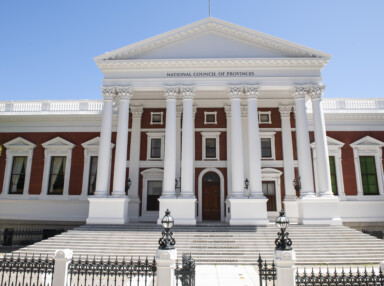
The amendment rebalances power within departments, clarifying the respective authority of ministers and senior officials. It was passed by the National Assembly in 2024 and is now before the National Council of Provinces, South Africa’s second house of parliament.
The NSI has played an active role in shaping debate and building support for this reform. If enacted, it will mark a decisive shift — the beginning of South Africa’s transition toward a more capable, rules-based, and effective state.