A Landmark for South African Democracy
President Signs Public Service Amendment Act, 2025 Into Law – The Most Significant Reform to the Country’s System of Government Since 1994
.
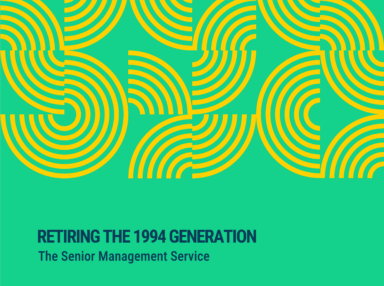
On 1 April 2026, President Cyril Ramaphosa signed the Public Service Amendment Act (PSAA), 2025, into law. The PSAA is a transformative piece of legislation that fundamentally restructures the relationship between political office and the public administration in South Africa. The Act is the most consequential reform to the country’s system of government since the advent of democracy.
For the first time since 1994, the power to appoint senior officials and make operational decisions within government departments will rest not with the President, Cabinet Ministers, or provincial Members of Executive Councils, but with the heads of those departments themselves. It is a change that sounds technical. Its implications are profound. Political interference in the day-to-day life of government departments has been one of the most persistent sources of administrative dysfunction, operational delays, and corruption in post-apartheid South Africa. By drawing a clear line between those who set policy and those who implement it, the PSAA creates the legal foundation for a genuinely capable, relatively autonomous public service, one that serves the Constitution and the public rather than the political interests of the moment. South Africa has long had the rhetoric of a developmental state. It now has the architecture to begin building one.
The Journey to This Moment
This legislation did not emerge overnight. It is the product of years of research, rigorous policy development, parliamentary engagement, and sustained coalition-building across government, academia, organised labour, and civil society. The New South Institute (NSI) developed the intellectual and technical foundation for this reform, working with government, parliamentary structures, and civil society partners to translate evidence into law. The process was neither simple nor linear. It required sustained engagement with the full machinery of the South African state, and an unwavering belief that reform from within was both possible and necessary.
“This is a historic day, not for any single organisation, but for South Africa,” said Ivor Chipkin, Executive Director of the NSI. “For thirty years, we have struggled with a public service in which political authority reached too deeply into administrative life, with damaging consequences for service delivery, accountability, and the integrity of the state. The Public Service Amendment Act changes that. It gives South Africa the legal framework it has needed since 1994. The hard work of implementation now begins, and we are committed to supporting it.”
A Coalition Achievement
The NSI is proud to celebrate the fact that this achievement belongs to many. Landmark legislation of this kind is never the work of one institution alone. The Portfolio Committee on Public Service and Administration in Parliament provided decisive legislative leadership, subjecting the bill to rigorous scrutiny and ensuring that it arrived at the President’s desk as a stronger, more durable piece of law than it was when the work began. The Department of Public Service and Administration and the Public Service Commission brought institutional knowledge and commitment to the process, without which progress would not have been possible. The academic community played a vital role in grounding this reform in evidence and in the broader literature on state capability and democratic governance. The NSI is particularly grateful to Professor Mashupye Maserumule and the South African Association of Public Administration and Management, whose scholarly contributions sharpened both the analysis and the argument. The Congress of South African Trade Unions and affiliated civil society bodies ensured that this process remained connected to the lived realities of public servants and the communities they serve.
Why This Matters Beyond South Africa
South Africa’s transition to democracy in 1994 was celebrated across the world. But democracies are not built in a single moment. They are built through the patient, unglamorous work of institutional reform – of getting the laws, the structures, and the incentives right. At a time when democratic institutions in many parts of the world are under pressure, when public trust in government is declining, and when the African continent is navigating complex questions about the relationship between political authority and administrative competence, South Africa has demonstrated something important: that a democracy can reform itself from within, through evidence, deliberation, and coalition.
The PSAA, 2025, is not the end of that journey. It is a beginning. The NSI looks forward to supporting its implementation and to continuing to contribute to the building of a capable, accountable South African state.
_____________________________________________________________________________________
Issued by the New South Institute
For media inquiries, please contact:
Delani Majola
+27 78 547 4981
+27 10 157 2037 / Ext 104
delanim@nsi.org.za