Watch: NSI’s Ivor Chipkin on Political Elites, Protest, and South Africa’s Public Service Reform
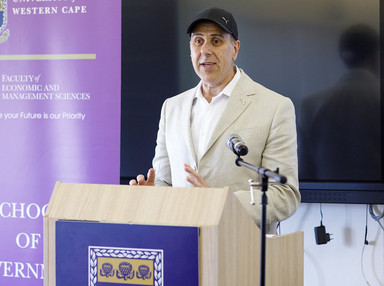
In late April, as South Africa prepared to implement new civil service reforms, Ivor Chipkin, Executive Director of the New South Institute, appeared on national television to discuss research on the relationship between political elites, service delivery protests and intra-party competition.
The conversation took place at a significant moment. Days earlier, the Public Service Amendment Act had been gazetted − legislation that seeks to strengthen the professional management of the public service and clarify the boundary between political authority and administrative appointments. Chipkin’s media appearances helped situate the reform within a broader discussion about patronage, state capacity and political instability.
What he explained on national television
On 29 April 2026, eNCA broadcast a segment titled “Study claims protests exploited for political ambitions”. Chipkin was clear that the research does not dismiss service delivery grievances. “We do not want to downplay the real dissatisfaction and grievance of ordinary South Africans,” he said.
The research adds another layer: It asks how political actors inside the ANC have mobilised those grievances within broader contests for power.
Here is what Chipkin explained:
The protest pattern does not map neatly onto living conditions. Between 2013 and 2017, protest activity declined, even as unemployment, inequality and service delivery challenges persisted or worsened. This raises questions about explanations that treat poor services alone as the primary driver of protest.
Elite dynamics also matter. During those years, Jacob Zuma’s administration consolidated power through patronage networks, including influence over appointments, contracts and positions across government, state-owned enterprises and the party. In the researchers’ account, this helped produce a “power elite”: a relatively cohesive group able to shape decisions across the state. That cohesion generated a period of relative stability at the elite level, which coincided with lower levels of protest activity.
When that settlement weakened, protest and instability increased. After Cyril Ramaphosa became ANC president in 2017, the mechanisms that had held this power elite together began to weaken. Without the same capacity to manage elite competition through patronage networks, the settlement fractured. Protests surged, elite factions split, the MK party emerged and organised crime became an increasingly important part of the political environment.
Why this matters for the Public Service Amendment Act
The Public Service Amendment Act can be read in this context: as part of an effort to strengthen professional norms in the public service and reduce the scope for political interference in administrative appointments. If elite competition for access to the state is one source of instability, then reforming how appointments are made becomes politically significant, not only administratively important.
Chipkin was cautious about the prospects for reform. “History is not encouraging and the political conditions are challenging,” he said. Whether the reform achieves its aims depends on implementation, and on how political actors respond as established forms of gatekeeping are weakened. One open question is whether competition moves toward legitimate policy contestation, or whether it is displaced into more destabilising forms, including organised crime and armed factionalism.
That question matters for South Africa’s ability to reduce cycles of elite-driven instability and protest.
The bigger picture
Chipkin also appeared on SAFM radio on 28 April, reaching audiences for whom the issue is not only academic, but practical: How should South Africans understand protest, violence and institutional reform in the current political moment?
The research does not tell citizens who to vote for or which faction to support. Its contribution is analytical: It argues that South African politics cannot be understood only through ideology or service delivery, but must also be read through elite competition for control of state resources.
That perspective changes how government reform, media narratives and political promises are evaluated.
This analysis reflects the New South Institute’s work to make rigorous research accessible to public audiences at moments of institutional change.
Where to learn more
Read the full analysis: The Conversation Africa (20 April 2026)
Watch the eNCA segment: “Study claims protests exploited for political ambitions” (29 April 2026)