NSI in the Media: Alan Hirsch on South Africa’s Draft Migration White Paper
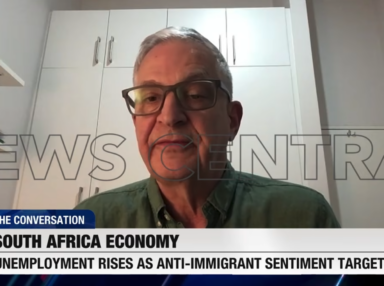
In a recent episode of Power Boardroom on POWER 98.7, the conversation turned to one of South Africa’s most contentious policy shifts: the overhaul of its immigration system.
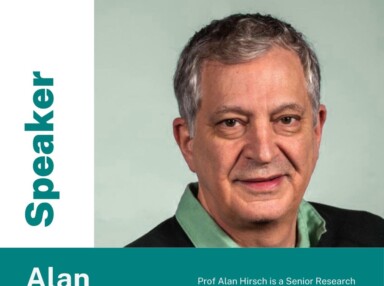
Host Tehillah Niselow was joined by immigration lawyer Ashraf Essop and Alan Hirsch, Head of Migration Governance Reform Programme at the New South Institute, to unpack the Draft Revised White Paper on Citizenship, Immigration and Refugee Protection. With the public comment period now extended to 15 February 2026, the discussion offered a timely critique of how these proposals could reshape rights, state capacity, and South Africa’s approach to mobility.
The Policy vs. Implementation Gap
Niselow framed the dialogue around a central tension: while there is broad consensus that the current system is under strain, the proposed solutions raise complex questions about feasibility and fairness.
A significant portion of the debate focused on the “route-based” approach to asylum—often termed the “first safe country” principle. Essop outlined the government’s rationale: reducing the use of asylum channels as a pathway for economic migration by requiring protection seekers to apply in the first safe country they enter.
While acknowledging the policy logic, Hirsch stressed that implementation is the real hurdle. For South Africa to treat a transit country as the appropriate place for protection, credible bilateral cooperation is essential. The panel debated whether sufficient incentives or international support exist to make these “safe third country” agreements workable in a resource-constrained region.
Modernisation and the “Plumbing” of the System
Beyond high-level policy, the conversation dug into the administrative machinery required to make the reforms stick. Hirsch highlighted the White Paper’s push for an Intelligent Population Register—a shift toward digital identity and biometric verification intended to curb fraud and improve service delivery.
While digitisation offers a way to bypass vulnerable paper-based systems, Hirsch cautioned that such foundational reforms are expensive, complex, and unlikely to be a quick fix. Similar skepticism applied to the proposal for a specialised Immigration Court; while intended to clear backlogs, it remains unclear how this new body would integrate with existing legal structures.
Reframing Citizenship and Integration
The discussion also touched on a fundamental shift in how South Africa views permanent residence. Hirsch described a move away from “time spent” in the country as a qualifying factor, towards a stricter, merit-based system focused on economic contribution and skills, managed through quotas.
However, legal frameworks do not operate in a vacuum. Listeners’ contributions to the show surfaced deep frustrations regarding corruption and “self-help” enforcement by communities. Hirsch observed a critical gap in the White Paper: if the policy rejects refugee camps in favour of integration, it lacks a clear strategy for social inclusion at the local level. Essop added a rule-of-law warning, noting that without efficient documentation systems, informal enforcement often devolves into abuse and extortion.
Public Participation: The Department of Home Affairs has extended the deadline for public input.
Deadline: 15 February 2026
Submissions: whitepaper@dha.gov.za
About the NSI Migration Programme Alan Hirsch leads the NSI’s Migration Governance Reform Programme, which focuses on practical institutional reforms—from border systems to documentation—and the policy trade-offs that shape migration outcomes across Africa.