Histories of Government: Building a Living Archive for Reform
The New South Institute has launched Histories of Government, a research and public-facing programme that examines how South Africa’s government institutions were built, reshaped, and contested over time. Rather than treating the state as a single, abstract entity, the programme focuses on the practical machinery of governance—specific departments, agencies, and policy systems—and how these structures influence economic decision-making and the delivery of public services.
The programme proceeds from the view that South Africa’s democratic transition after 1994 involved not only political change, but also rapid institutional reconstruction under significant pressure. In practice, this produced uneven capacity and resilience across the administration. By documenting how these differences emerged and how they have evolved, Histories of Government aims to support more grounded discussions about institutional reform.
A core objective is to recover and preserve institutional memory, treating historical analysis as a practical input into policymaking. The programme traces distinct institutional trajectories across key sites, including the Department of Home Affairs, the South African Revenue Service (SARS), National Treasury, and the policy field of land reform. Drawing on archival material and interviews with senior public servants, the research will contribute to a “living archive” of evidence and analysis intended to inform future reform efforts and reduce the risk of repeating avoidable mistakes.
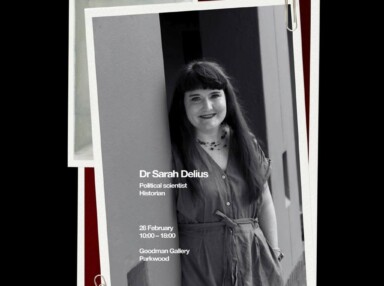
The programme is led by NSI Affiliate Researchers Andries du Toit and Sarah Delius. Andries du Toit is Professor at the University of the Western Cape’s School of Government and has worked extensively on state formation and the structural legacies of colonialism and apartheid, with a focus on power, inequality, and agrarian change. Sarah Delius holds a PhD in Political Science from the University of the Witwatersrand and has a background in history from SOAS University of London. Her work combines archival research with analysis of the genealogy of state practices, including research on gender and empire.